

Do small balcony awnings block UV rays?
As a supplier of small balcony awnings, I often get asked whether our products can effectively block UV rays. It's a valid concern, as exposure to ultraviolet (UV) radiation can have detrimental effects on both our health and our belongings. In this blog post, I'll delve into the science behind UV rays, explain how small balcony awnings work to block them, and share some tips on choosing the right awning for maximum UV protection.
Understanding UV Rays
UV rays are a type of electromagnetic radiation emitted by the sun. They are classified into three categories based on their wavelength: UVA, UVB, and UVC. UVC rays are the shortest and most harmful, but they are mostly absorbed by the Earth's atmosphere and do not reach the surface. UVB rays are responsible for sunburn, skin aging, and skin cancer. They have a medium wavelength and can penetrate the outer layer of the skin. UVA rays have the longest wavelength and can penetrate deeper into the skin, causing damage to the collagen and elastin fibers, which can lead to wrinkles and premature aging.
How Small Balcony Awnings Block UV Rays
Small balcony awnings work by providing a physical barrier between the sun's UV rays and your balcony. They are typically made of materials that are designed to absorb, reflect, or scatter UV radiation. Some common materials used in balcony awnings include fabric, metal, and polycarbonate.
Fabric awnings are a popular choice because they are affordable, easy to install, and come in a variety of colors and styles. Many fabric awnings are treated with a special UV-resistant coating that helps to block a significant amount of UV radiation. The effectiveness of the coating depends on the quality of the fabric and the thickness of the coating.
Metal awnings, such as aluminum or steel, are more durable and long-lasting than fabric awnings. They are also more effective at reflecting UV rays, which can help to keep your balcony cooler. However, metal awnings can be more expensive and may require professional installation.
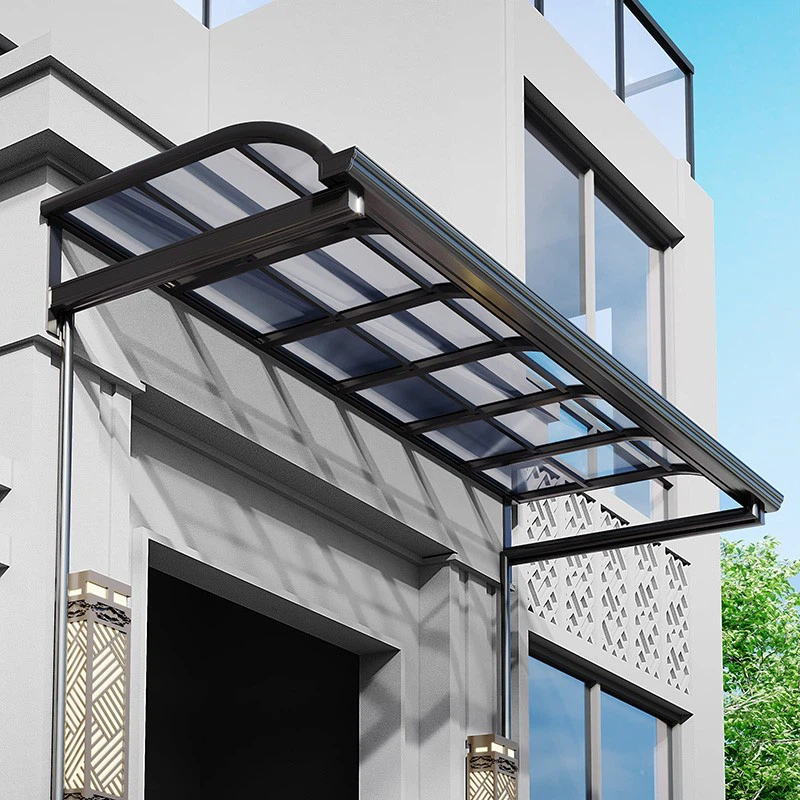
Polycarbonate awnings are a lightweight and transparent alternative to fabric and metal awnings. They are made of a strong, impact-resistant material that is designed to block UV rays while still allowing natural light to pass through. Polycarbonate awnings are a good choice for balconies that receive a lot of sunlight, as they can help to reduce the amount of heat and glare.
Factors Affecting UV Protection
The effectiveness of a small balcony awning in blocking UV rays depends on several factors, including the type of material, the color and pattern of the awning, the angle of the sun, and the size and shape of the balcony.
Material: As mentioned earlier, different materials have different levels of UV protection. Fabric awnings with a UV-resistant coating are generally the most effective at blocking UV rays, followed by metal awnings and polycarbonate awnings.
Color and Pattern: Darker colors and patterns tend to absorb more UV radiation than lighter colors and patterns. However, some manufacturers offer awnings with special UV-reflective coatings that can help to reduce the amount of UV radiation absorbed by the fabric.
Angle of the Sun: The angle of the sun changes throughout the day and the year, which can affect the amount of UV radiation that reaches your balcony. Awnings that are installed at an angle can provide better protection against the sun's rays than awnings that are installed flat.
Size and Shape of the Balcony: The size and shape of your balcony can also affect the effectiveness of your awning. Awnings that are too small or too short may not provide enough coverage, while awnings that are too large or too wide may be difficult to install and may not be as effective at blocking UV rays.
Choosing the Right Small Balcony Awning for UV Protection
When choosing a small balcony awning for UV protection, it's important to consider the following factors:
UV Protection Rating: Look for awnings that have a high UV protection rating, such as a UPF (Ultraviolet Protection Factor) of 50+ or a UV blockage rate of 99%. This will ensure that your awning provides maximum protection against UV rays.
Material: Choose a material that is suitable for your climate and your balcony's location. Fabric awnings are a good choice for most climates, while metal awnings are more suitable for areas with high winds or heavy rain. Polycarbonate awnings are a good choice for balconies that receive a lot of sunlight.
Color and Pattern: Choose a color and pattern that you like, but also consider the UV protection factor. Darker colors and patterns tend to absorb more UV radiation, so if you're looking for maximum UV protection, choose a lighter color or pattern.
Size and Shape: Measure your balcony carefully and choose an awning that is the right size and shape for your balcony. Awnings that are too small or too short may not provide enough coverage, while awnings that are too large or too wide may be difficult to install and may not be as effective at blocking UV rays.
Installation: Make sure that your awning is installed correctly by a professional installer. Improper installation can reduce the effectiveness of your awning and may also pose a safety hazard.

Conclusion
In conclusion, small balcony awnings can be an effective way to block UV rays and protect your balcony from the sun's harmful effects. By choosing the right material, color, and size, and by installing your awning correctly, you can ensure that your balcony is a safe and comfortable place to relax and enjoy the outdoors.
If you're interested in purchasing a small balcony awning for UV protection, please visit our website at Small Balcony Sun Shade to browse our selection of high-quality awnings. We also offer a range of other outdoor shading products, such as Heat Insulation Windproof Roller Shutter and Balcony Side Awning.
If you have any questions or would like to discuss your specific needs, please don't hesitate to contact us. Our team of experts is always happy to help you choose the right awning for your balcony and provide you with professional installation services.
References
- American Academy of Dermatology. (n.d.). UV radiation. Retrieved from https://www.aad.org/public/everyday-care/sun-protection/sunburn-prevention/uv-radiation
- National Cancer Institute. (n.d.). Ultraviolet (UV) radiation. Retrieved from https://www.cancer.gov/about-cancer/causes-prevention/risk/sun/uv-radiation-fact-sheet
- Skin Cancer Foundation. (n.d.). Sun protection. Retrieved from https://www.skincancer.org/prevention/sun-protection