

As a supplier of aluminum louver pergolas, I've had numerous conversations with customers trying to decide between an aluminum louver pergola and a wooden pergola. Both options have their own unique characteristics, advantages, and drawbacks. In this blog, I'll delve into a detailed comparison of these two types of pergolas to help you make an informed decision.
Durability
One of the most significant factors to consider when choosing a pergola is its durability. Wooden pergolas, typically made from cedar, redwood, or pressure - treated pine, have been a popular choice for a long time. Cedar and redwood are naturally resistant to rot and insects due to the presence of natural oils. Pressure - treated pine, on the other hand, has been chemically treated to enhance its resistance to decay and pests.
However, wood is still susceptible to the elements. Over time, exposure to rain, snow, and sunlight can cause the wood to warp, crack, or split. In areas with high humidity or heavy rainfall, wooden pergolas may require more frequent maintenance, such as staining or sealing, to protect the wood and extend its lifespan.
In contrast, aluminum louver pergolas are highly durable. Aluminum is a corrosion - resistant material, meaning it won't rust or rot even when exposed to moisture. It can withstand harsh weather conditions, including strong winds, heavy rain, and extreme temperatures. This makes aluminum louver pergolas an excellent choice for outdoor spaces in any climate. Additionally, the louvers on these pergolas are designed to be sturdy and can be adjusted to control sunlight and ventilation, further enhancing their functionality and durability. You can check out our Large Louvered Pergola for a more detailed look at the durability and design of our products.

Maintenance
Maintenance is another crucial aspect to consider. Wooden pergolas demand regular upkeep to maintain their appearance and structural integrity. As mentioned earlier, staining or sealing the wood every few years is necessary to protect it from the elements. This process can be time - consuming and requires some skill to ensure an even application. Moreover, if any parts of the wood become damaged, they may need to be replaced, which can be costly and labor - intensive.
Aluminum louver pergolas, on the other hand, are relatively low - maintenance. A simple cleaning with soap and water a few times a year is usually sufficient to keep them looking good. There's no need for staining or sealing, and any minor scratches or dents can be easily repaired. The adjustable louvers also add to the ease of maintenance, as they can be easily cleaned and adjusted as needed. Our Aluminium Gazebo with Louvered Roof is a prime example of a low - maintenance outdoor structure.
Aesthetics
When it comes to aesthetics, both wooden and aluminum louver pergolas have their own charm. Wooden pergolas offer a natural, warm, and rustic look that can blend seamlessly with a garden or natural landscape. The texture and grain of the wood add a sense of authenticity and character to the outdoor space. Different types of wood can also provide a variety of colors and tones, allowing you to choose the one that best suits your style.
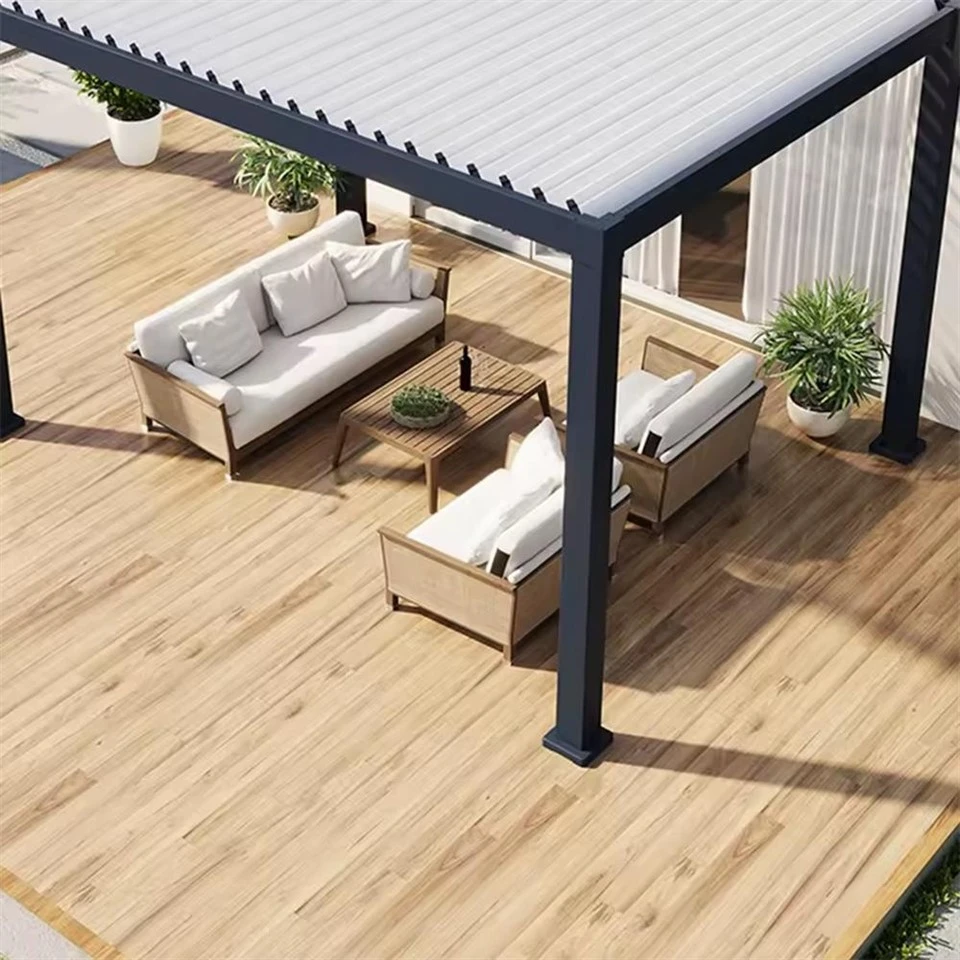
Aluminum louver pergolas, on the other hand, offer a more modern and contemporary look. The sleek lines and smooth finish of aluminum give these pergolas a clean and sophisticated appearance. The adjustable louvers not only provide functional benefits but also add an interesting visual element. They can be adjusted to create different patterns of light and shadow, adding a dynamic aspect to the outdoor space. For those who prefer a more modern aesthetic, our Pergola With Black Metal Roof is an excellent option.
Cost
Cost is often a deciding factor for many customers. The initial cost of a wooden pergola can vary depending on the type of wood used. Cedar and redwood are generally more expensive than pressure - treated pine. However, in addition to the upfront cost, you also need to consider the long - term maintenance costs. As mentioned earlier, wooden pergolas require regular staining or sealing, which can add up over time.
Aluminum louver pergolas may have a higher initial cost compared to some wooden pergolas. However, when you factor in the low maintenance requirements and long lifespan, they can be a more cost - effective option in the long run. You won't have to spend money on regular maintenance or worry about replacing damaged parts as frequently as you would with a wooden pergola.
Functionality
Functionality is an important consideration for any outdoor structure. Wooden pergolas provide a basic shelter from the sun and can be a great place to relax or entertain. However, they offer limited control over sunlight and ventilation. Once the pergola is built, it's difficult to adjust the amount of sunlight or airflow it allows.
Aluminum louver pergolas, on the other hand, are highly functional. The adjustable louvers allow you to control the amount of sunlight that enters the pergola. You can open the louvers to let in more sunlight on sunny days or close them to provide shade when it gets too hot. The louvers also help with ventilation, allowing fresh air to circulate through the pergola. This makes aluminum louver pergolas a more versatile option for outdoor living.
Environmental Impact
In today's environmentally conscious world, the environmental impact of a product is an important consideration. Wooden pergolas are made from a renewable resource, which is a positive aspect. However, the production of wooden pergolas may involve deforestation if not sourced sustainably. Additionally, the chemicals used in pressure - treated wood can have a negative impact on the environment.
Aluminum is also a recyclable material. The production of aluminum has become more energy - efficient over the years, and recycling aluminum requires significantly less energy compared to producing new aluminum. This makes aluminum louver pergolas a more environmentally friendly option in terms of long - term resource management.
In conclusion, both aluminum louver pergolas and wooden pergolas have their own advantages and disadvantages. If you prefer a natural, rustic look and don't mind the regular maintenance, a wooden pergola may be the right choice for you. However, if you're looking for a durable, low - maintenance, and highly functional option with a modern aesthetic, an aluminum louver pergola is the way to go.
If you're interested in learning more about our aluminum louver pergolas or are considering a purchase, we'd love to have a conversation with you. Contact us to discuss your specific needs and preferences, and let's work together to create the perfect outdoor space for you.
References
- "Outdoor Structures: Design and Construction" by John Doe
- "Materials for Outdoor Living" by Jane Smith
- Industry reports on aluminum and wood pergola manufacturing and market trends.